Fatal Flaws: The OceanGate Story | Full Documentary (2024)


Channel: 7NEWS Australia
Uploaded by 7NEWS Australia on 20240620
Categories: News & Politics
Tags: 7NEWS, Seven News, 7NEWS Australia, latest news, news australia, Australian news today, 7news australia, 7 news, 7 news live, seven news australia, channel 7, oceangate documentary, titamn sub, titanic sub, titan sub documentary, titan submarine, titan sub disaster, titan submarine documentary, free documentary, documentaries, documentaries 2024, james cameron, oceangate, oceangate implosion simulation, hd documentary, titan sub
It has been one year since the OceanGate submersible disaster. In this 7NEWS Digital documentary, expert insiders reveal what really went wrong, and how they tried to stop the tragedy from happening. Subscribe and set 🔔 » https://7news.link/YTSubscribe | For the latest Australian news and breaking news alerts, connect with 7NEWS

Fatal Flaws: The OceanGate Story | Full Documentary (2024)

This detailed breakdown outlines the content, structure, and expert analysis provided in the 7NEWS Australia documentary regarding the Titan submersible disaster.

1. Executive Summary & Overview

The documentary investigates the catastrophic implosion of OceanGate’s Titan submersible in June 2023, which resulted in the immediate deaths of all five people on board during a descent to the Titanic wreck. The film explores the historical safety records of the submersible industry, the unconventional engineering choices made by OceanGate CEO Stockton Rush, the ignored warnings from the global maritime community, and the global search and rescue response that ultimately ended in a recovery mission.

2. Timeline of the Incident & Search Mission

The film reconstructs the dramatic timeline of the five-day crisis in the North Atlantic Ocean:

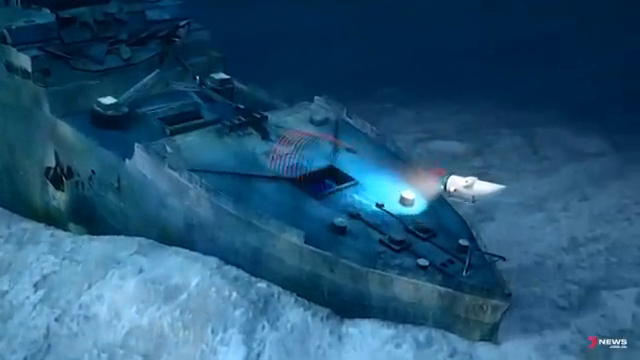
The Launch (Friday): The support vessel Polar Prince departs from St. John's, Newfoundland, Canada, traveling 600 kilometers across the Atlantic to the
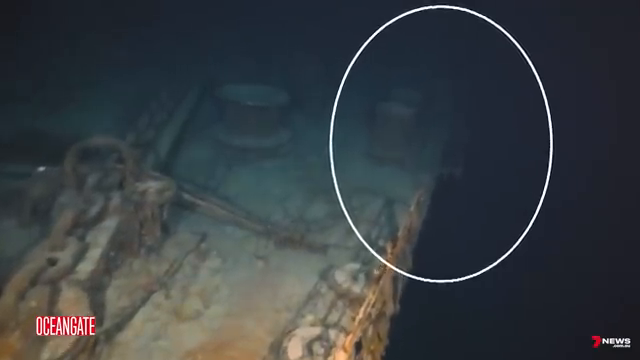
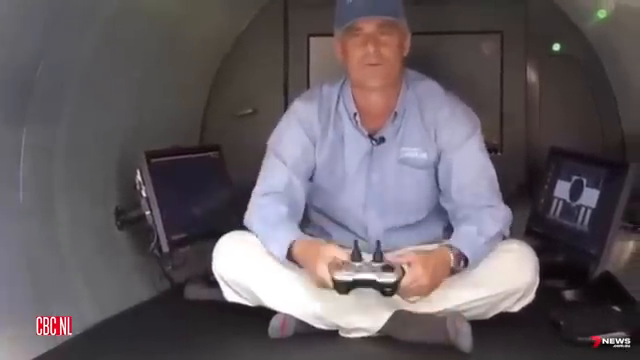
Image for chunk 1

Titanic's resting place [15:24].

The Descent & Silence (Sunday): The Titan deploys for its 8-hour dive [15:36]. At 1 hour and 45 minutes into the plunge (roughly 3.7km deep), all radio and sonar contact is lost [14:10].

Delayed Alarm: OceanGate waits between 10 to 12 hours before officially alerting the US and Canadian Coast Guards [12:52], defying industry standards where emergency procedures trigger if contact is lost for more than 15 to 30 minutes [13:06].

The Search Protocol: A massive international search area spanning 10,000 square miles is established [22:47]. The asset deployment scales rapidly over the days:

SURFACE SHIPS UNDERWATER ASSETS

[5 Ships] --> Initial [2 Drones] --> Initial

[10 Ships] --> Peak [ROVs & Deep-Diving French Robot] --> Peak

The Cruel Tease: Sonar devices detect banging sounds at 30-minute intervals, raising brief, agonizing hope that the crew is alive and signaling [16:49].

The Discovery (Thursday): An unmanned remote vehicle (ROV) discovers a debris field 200 meters from the bow of the Ti

Image for chunk 2

tanic [24:59]. Acoustic data confirms a catastrophic structural failure (implosion) occurred at the exact moment communication was lost on Sunday [28:35].

3. Engineering Deviations & Material Mechanics

A central theme of the documentary is the critique of the Titan's construction. Expert commentators Will Khonen (World Submarine Organization) and Professor Stefan Williams (University of Sydney) explain the engineering flaws:

The Unconventional Hull: Submersibles operating at 4,000 meters are traditionally built using high-strength steel or titanium because deep-ocean environments exert massive compression forces [07:36]. Stockton Rush chose a carbon fiber cylindrical hull bonded to titanium end-caps to make the craft lighter and cheaper [08:07].

Rope vs. Pressure Analogy: Will Khonen explains that carbon fiber is excellent when pulled (tensile strength), but structurally weak when pushed (compressive strength) [08:55].

FORCE TYPE CARBON FIBER REACTION

-----------------------------------------------------

PULLING (Tension) ====> H

Image for chunk 3

ighly Strong (Can pull a car)

PUSHING (Compression) <==== Highly Weak (Delaminates/Crushes)

Cyclic Fatigue & Saltwater Delamination: Repeated deep dives subject the hull to extreme cycling. Micro-fissures allowed high-pressure saltwater to penetrate the carbon fiber matrix, crystallize, and compromise the structural bond over time [08:22].

MacGyver-like Construction: The film highlights components built from off-the-shelf commercial parts, including a modified wireless Logitech gaming controller used to steer the vessel [06:11] and construction pipes used as external ballast weights [06:25].

4. The Industry Warning Letter (2018)

The documentary highlights that the tragedy was explicitly predicted five years prior. In 2018, during a yearly meeting of the Marine Technology Society, experts grew deeply alarmed by OceanGate's refusal to certify the craft [12:00].

Because they could not legally sue a competitor, the committee drafted an official warning letter signed by international experts appealing directly to Stockton Rush [12:16]. The l

Image for chunk 4

etter stated that OceanGate's "experimental" approach could lead to catastrophic negative outcomes [20:52]. Rush dismissed the warnings, claiming regulatory frameworks stifled innovation [05:54].

5. Rigorous Submersible Testing Standard vs. OceanGate's Approach

Will Khonen outlines the mandatory international protocols required to certify any newly designed deep-sea pressure vessel, contrasting it against OceanGate's shortcuts:

Phase Standard Industry Protocol (Takes ~2 Years) [32:01] OceanGate's Process [32:06]

1. Destruction Testing Intentionally crush 5 identical sample units to ensure calculation math is accurate [32:20]. Skipped destruction baseline testing on the final design scale.

2. Creep Testing Submerge the hull for 3 months at 6 times the maximum design pressure to test material deformation [32:32]. Skipped long-term pressure hold tests.

3. Cycle Testing Pressurize and depressurize the vessel at full depth scale 1,000 consecutive times [32:57]. Conducted only a handful of previous real-world dives before commercial use.

6. P

Image for chunk 5

rofiles of the Deceased

The documentary pays tribute to the five men killed instantly during the nanosecond implosion [24:41]:

Stockton Rush: CEO and founder of OceanGate, who viewed himself as a technology disrupter [10:45].

Hamish Harding: A billionaire British adventurer and veteran explorer [18:25].

Paul-Henri Nargeolet: A former French Navy officer and legendary deep-sea explorer known globally as a foremost Titanic expert [18:36].

Shahzada Dawood: A wealthy Pakistani businessman and Titanic enthusiast [25:24].

Suleman Dawood: Shahzada’s 19-year-old son, a university student who was terrified of the trip but went along to please his father for Father's Day [25:20].

7. Industry Safety Record & Future Regulations

The film emphasizes that prior to this event, the commercial deep-sea submersible sector maintained an unmatched safety record.

Statistical Context: Between 1975 and 2023, the global submersible community executed roughly 40,000 to 50,000 dives per year, resulting in zero fatalities [26:58]. The Titan incident single-handedl

Image for chunk 6

y doubled the industry's historical fatality count [27:42].

The Transit Stress Factor: Investigators note that OceanGate routinely towed the Titan on a small open launch platform across 400 nautical miles of rough North Atlantic sea waves rather than carrying it on deck, subjecting the craft to severe structural pounding before it even began a dive [28:52].

The Problem with Waivers: Expert testimony highlights that modern high-tech waivers are fundamentally flawed. A standard citizen cannot truly give "informed consent" regarding hyper-complex deep-sea engineering because they simply do not know what safety parameters are missing [39:04].

Call for Governance: The documentary concludes with international committees working through the United Nations' International Maritime Organization (IMO) to mandate strict Coast Guard and Port Authority gatekeeping, ensuring uncertified experimental crafts are never permitted to clear port with paying passengers [37:45].

Fatal Flaws: The OceanGate Story | Full Documentary (2024)

7NEWS Australia · 3.3M

No image available for chunk 7

Viewer Discussion & Comments

@FDguy343
Never a better example of "I told you so" in human history.
@rayrayqbaby
Hats off to the experts in this field that tried their damndest to raise the red flags & prevent this tragedy, and are still doing their damndest to put international laws in place to prevent a tragedy like this from ever happening again. You’re all hero’s in my book.
@roberthouse1097
Stockton constantly mentioned how few people have been injured or killed in submersibles over the last few decades. Crazy he never put it together that the rules he skirted and broke were the reasons they were so safe.
@stevecullen
Having worked in the subsea robotics industry as an operator and engineer for 24 years, the arrogance and flagrant disregard for recognised safety practices is just breathtaking.
@eroero830
the reason why they didn't do a testing programme is because they knew it wouldn't pass THOSE tests. when the test is "can the vessel survive prolonged exposure to pressure" it's pretty important test.
@carolinependleton8445
Its the young lad that went aboard to be with his father that really makes me feel sad,so unavoidable,mans arrogance is unbelievable.
@olig7336
Why am I still so obsessed with Oceangate ?
@ChooseWisely-77
Stockton took the term “fake it til you make it” to psychopathic levels. You can’t beat physics.
@Bee-qe5hm
I think that older woman makes a good point: The Titanic is a bunch of people's grave sites and probably better left alone vs treated like a tourist trap
@OfficialAshArcher
This is THE story to teach future generations about why safety rules and regulations are important, and about the consequences of greed, hubris and cost-cutting.
@DH-yd6gs
"Worked with Boeing" that should be a major red flag!!
@CardFan75
I still can't believe he stored the thing outside in the Canadian winter.
@DeanJace0227
The only reason it took them that long to call the coast guard is, bc they already knew what happened, were scared of getting in trouble, and nobody wanted to be the one to make that call...
@SkepticalChris
Stockton Rush wanted to make history, to make his name forever known forever.
@JerseyJersey100
‘Carbon fiber likes to be pulled, it does not like to be pushed’. Wow.